
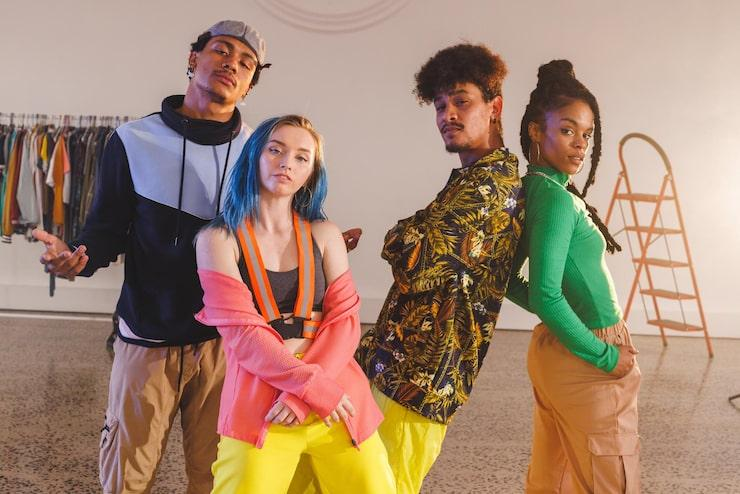
Isabelle Bataglin is an internationally recognized portrait and fashion photographer based in Los Angeles. With over two decades of experience working across Hollywood and international fashion markets she has become one of the most trusted voices in commercial youth fashion photography.
Key Takeaways
- Rigid studio staging produces technically correct images. But they lack the energy and authenticity that modern youth fashion brands need to connect with their audiences.
- Isabelle Bataglin’s approach to youth campaign photography is built on genuine expression and environments that reflect how young people actually exist in the world.
- Brands that shift away from studio staging are seeing stronger audience engagement because the images feel like real life rather than a carefully constructed version of it.
There is a particular kind of photograph that has dominated commercial youth fashion for decades. It involves perfectly pressed clothing and symmetrical composition. Young subjects stand exactly where they are placed. They hold exactly the expression they were asked to. The resulting image is technically flawless. Yet audiences have stopped responding to it.
Isabelle Bataglin has watched that shift happen in real time across her career. Young audiences are exceptionally good at detecting performance. This is what Isabelle has known for years while brands are just discovering today. Young audiences grew up in an era of unfiltered content and behind-the-scenes footage. They experienced a social media that rewards candid over constructed poses. When a campaign image feels staged, they feel it immediately and move on.
Why Studio Staging Stopped Working
The studio environment was built for control:
- Controlled light
- Controlled background
- Controlled subject positioning
For certain categories of fashion photography that control still makes sense. But it has become a liability for youth campaigns.
The problem is not the studio itself. The issue is related to what the studio does to young subjects. Children and teenagers respond to their environments. If you put them on a marked spot under studio lights, with a photographer behind a camera and a client behind the photographer, something closes down within them. The spontaneity that makes youth fashion imagery compelling disappears. What remains is a child doing their best impression of what they think a model is supposed to look like.
That impression is visible in every frame. This is exactly what modern youth fashion brands are trying to move away from.
What Isabelle Bataglin Does Instead
Isabelle’s approach to youth campaign photography begins with environment selection rather than studio booking.
She looks for locations that have genuine visual energy. This includes spaces where natural light creates dimensional or interesting illumination. It can also be a space where the setting itself gives young subjects something real to interact with:
- A sun-filled outdoor space.
- An architecturally interesting interior with large windows.
Isabelle focuses on locations that connect to the actual world of the young people being photographed.
Building an Environment of Ease
Isabelle Bataglin invests time in making her young subjects comfortable before a shoot begins. She does not brief them on shot requirements or run through a pose list. She simply talks with them and finds out what they are interested in. She tries to build the kind of ease that a studio setup can rarely produce on its own.
Isabelle holds a Child Performer Services Permit issued by the California Department of Industrial Relations. The wellbeing of young subjects is her first priority in every session. That priority is not separate from the quality of her work. It is the foundation of it. Young people who feel safe and at ease in front of a camera produce images that no amount of technical direction can replicate.
Movement as the Primary Directive
The primary directive for a young subject in a rigid studio setup is stillness – Standing somewhere, holding something, and looking somewhere. But Isabelle’s primary directive is movement. She creates situations where natural action can emerge. She wants her subjects to do something rather than just posing for something. Her camera captures what happens within that movement rather than interrupting it with direction.
The clothing will still read clearly and the brand identity will still come through. But the image now will carry the energy that youth fashion audiences actually respond to.
What This Means for Brands
The shift away from rigid studio staging is not a stylistic trend. It is a response to a fundamental change in how young audiences consume visual content.
Brands that make this shift are not sacrificing production quality. They are redefining what production quality means in the context of youth fashion – moving from a standard built around technical perfection toward one built around authentic energy. The resulting images are harder to make and considerably more powerful when done well.
Isabelle Bataglin has been making them for over twenty years. The brands working with her are the ones that understand the difference between an image that looks impressive and one that actually connects.