
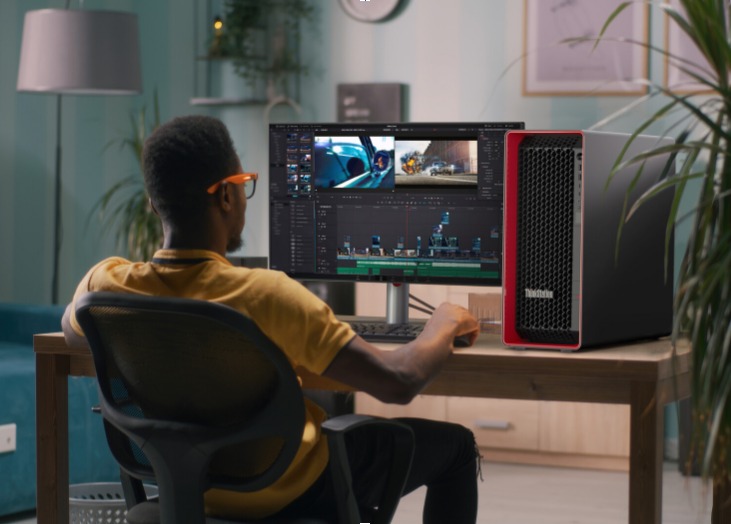
Walk onto any modern VFX floor, and you won’t just hear artists talking about shots; you’ll hear them talking about render queues. A single frame of a photorealistic creature or a fluid simulation can take hours to process, and a feature film might need thousands of those frames finished on a deadline that doesn’t move. Creativity still drives the work, but computing power decides how much of that creativity actually makes it to screen on time.
That shift has been building for years, and it’s not slowing down. As resolution, frame rates, and simulation complexity keep climbing, the machines behind the work have had to climb right along with them.
Why Film and VFX Studios Are Leaning Harder on HPC
A decade ago, a workstation with a solid CPU and a decent GPU could handle most production pipelines without much trouble. That’s no longer close to enough. Today’s projects routinely involve 8K footage, dense particle simulations, real-time ray tracing, and AI-assisted tools layered into nearly every stage of post-production.
Studios that lean on outdated hardware end up paying for it in ways that go beyond frustration. Render farms sit idle waiting on bottlenecked workstations, artists lose hours to crashes mid-simulation, and deadlines get missed not because the creative work wasn’t ready, but because the machine behind it wasn’t.
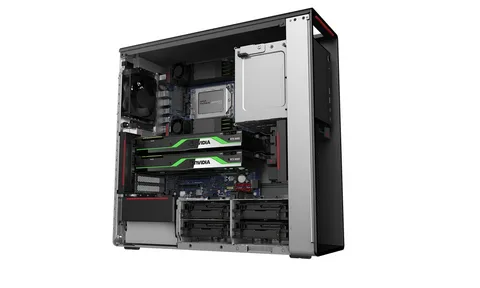
This is exactly why so many studios and freelance artists are moving toward hardware purpose-built for GPU-heavy rendering. A Redshift and Ryzen workstation is a good example; it’s built around the specific demands of GPU-accelerated rendering engines, which is where a huge chunk of modern VFX work actually lives.
The Real Cost of Slow Rendering
Time is the one resource no production ever has enough of. When rendering slows down, everything downstream slows with it: client reviews, revisions, final delivery. It’s rarely just an inconvenience; it’s money.
A few ways slow rendering quietly drains a production:
- Artists spend more time waiting on previews than actually iterating on shots
- Tight deadlines force rushed decisions instead of proper creative refinement
- Overnight render batches fail partway through, wasting an entire cycle
- Studios end up paying for extra cloud rendering just to hit a delivery date
None of that is really about talent. It’s about whether the hardware can keep pace with what the artists are trying to do.
How High-Performance Computing Changes the Creative Process
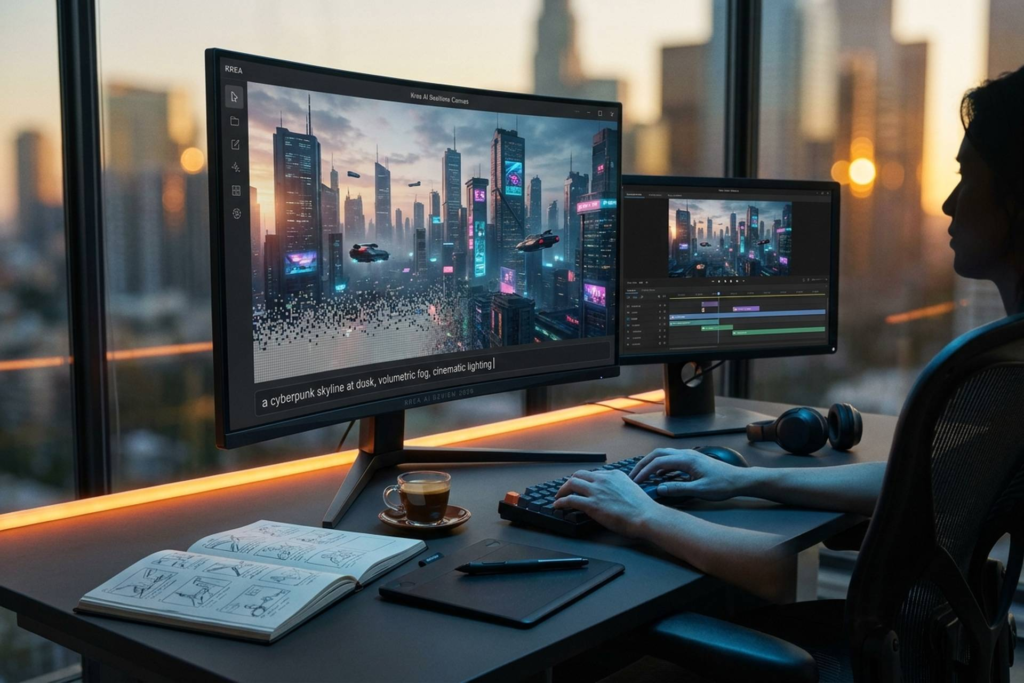
Faster machines don’t just save time; they change how artists actually approach their work. When a lighting pass or a simulation renders back in minutes instead of hours, something shifts in how people experiment.
More Iteration, Better Results
Nobody nails a shot on the first try. The best work usually comes from trying a version, seeing how it looks, and adjusting over and over. Slow hardware punishes that process by making every attempt expensive in time. Fast hardware turns iteration into something artists can actually afford to do, which tends to show up directly in the final quality.
Real-Time Feedback Instead of Guesswork
Modern GPU rendering has closed a lot of the gap between “what I built” and “what it’ll actually look like.” Artists can preview lighting, shaders, and camera moves close to real time instead of guessing and rendering overnight to find out they were wrong. That kind of feedback loop only works if the underlying hardware can actually keep up with it.
Handling Increasingly Complex Pipelines
Modern VFX pipelines stack tool after tool: simulation software, compositing suites, color grading, AI-assisted cleanup often running at the same time. Systems built for this kind of workload can juggle several demanding applications without buckling, which matters more and more as pipelines keep getting more layered.
Specialized Workflows Need Specialized Hardware
Not every corner of post-production runs on the same software, and not every workstation handles every workload equally well. Editors working in color-heavy RED footage pipelines, for instance, often need something built specifically around that ecosystem. A REDCINE-X PRO AMD Ryzen workstation is tuned for exactly that kind of work, handling RAW footage debayering and color grading without the stutter that a generic machine tends to introduce.
Match the machine to the pipeline instead of forcing one system to do everything, and studios end up spending less time fighting their own hardware.
Digital Media Beyond Film: The Bigger Picture
Film and VFX are only part of the story. Streaming platforms, game studios, and virtual production teams are all leaning on the same class of high-performance systems.
- Streaming and broadcast: Live production increasingly relies on real-time graphics and instant replay tools that demand serious processing muscle behind the scenes.
- Game development: Cinematic cutscenes and in-engine rendering now blur the line between game assets and film-quality visuals.
- Virtual production: LED-wall filmmaking depends entirely on systems that can render believable environments live, on set, with no room for lag.
Across all of these, the pattern holds: better hardware means faster iteration, and faster iteration means better final output.
Choosing the Right System for Creative Work
Picking hardware for film and VFX work isn’t really about chasing the biggest number on a spec sheet. It’s about matching the system to the actual software stack GPU-accelerated renderers, RED workflows, simulation-heavy pipelines rather than assuming one general-purpose build can handle it all equally well.
Final Thoughts
High-performance computing has quietly become one of the deciding factors in how film, VFX, and digital media get made. It shapes how much artists can iterate, how quickly studios can turn projects around, and how far a budget can stretch before deadlines start slipping. As visual complexity keeps rising, the hardware behind the work is only going to matter more, not less.
Studios and independent artists who treat their workstations as part of the creative pipeline, rather than an afterthought, tend to move faster and produce work that holds up under pressure. That’s the idea behind Cloud Ninjas, which builds workstations tailored to the specific demands of film, VFX, and digital media production instead of repurposing general-purpose machines for jobs they were never built to handle.
 Sufyan amir