
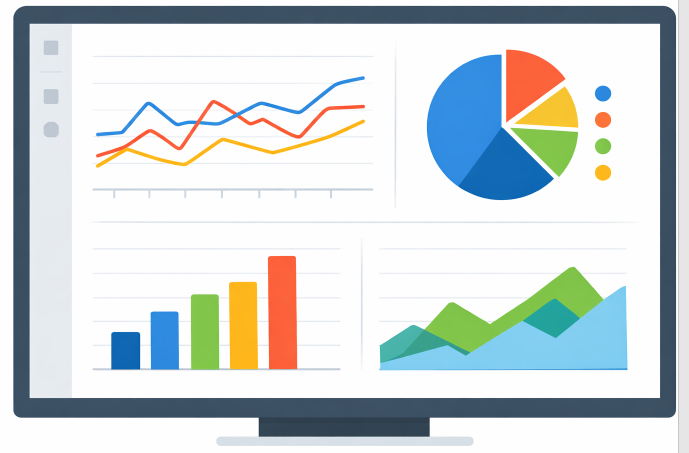
Financial dashboards are transforming how organizations track, analyze, and act upon their financial health. For managers and executives tasked with strategic oversight, a financial dashboard delivers a consolidated view of vital metrics, allowing teams to move beyond spreadsheets and make swift, informed decisions. By bringing data together from multiple sources and presenting it visually, these platforms accelerate understanding and ensure critical financial indicators do not go unnoticed. With business environments becoming increasingly complex, the need for real-time and accessible financial data has never been greater. Effective dashboards streamline this process. They aggregate performance metrics into a cohesive interface, visually highlighting trends and exceptions that require attention. Both large enterprises and small businesses rely on dashboards to help identify cost-saving opportunities, assess revenue growth, and monitor compliance. These tools empower organizations to respond proactively, not just reactively, to financial developments. Intuitive dashboards serve a dual purpose: they clarify complex financial data and save valuable time traditionally spent pulling manual reports or chasing down information across departments. By integrating customization options, organizations can fine-tune their dashboards for their unique priorities and goals, further adding to their value as core decision-support tools. As professionals search for smarter ways to understand their organization’s financial status, dashboards provide more than simple monitoring. They foster a culture of accountability and speed up the decision-making process, helping leaders stay on track to meet business milestones.
Introduction
Fast-paced market conditions are shaping the way organizations approach financial management. Tools that aggregate, display, and update financial metrics in real time are essential for keeping pace. Financial dashboards address this need by compiling information from various systems—such as accounting, operations, and CRM into a readily accessible and coherent format. With key figures available at a glance, teams can shift focus toward value-added analysis rather than spending time consolidating and validating data manually.
Real-Time Data Updates
The ability to provide up-to-the-minute financial information is the backbone of any effective dashboard. Real-time data integration ensures that organizations respond quickly as new transactions, expenses, or revenue changes occur. This functionality is especially crucial for organizations that operate in fast-changing industries or manage significant transaction volumes. Automatic updates from enterprise solutions, such as ERP and CRM platforms, help synchronize data and minimize the risk of human error. For guidance on integrating real-time data, resources from TechTarget offer best practices.
Interactive Visualizations
Interactive dashboards turn dense financial data into actionable insights by providing charts, graphs, and dynamic visuals. Users can drill deeper into the numbers behind revenue trends or cost spikes simply by clicking on a chart segment, which allows for a richer understanding without leaving the dashboard. Effective visualizations help highlight patterns, outliers, and progress toward goals, making it easier for leaders to prioritize actions and address potential issues early. Geckoboard discusses how data visualization drives improved business outcomes in their visualization guide.
Customization Options
No two organizations have the same financial objectives. The ideal dashboard allows for full customization so every team member sees information that is most relevant to them. Customization might range from selecting specific KPIs for a sales manager to configuring compliance alerts for financial controllers. Color schemes, layout adjustments, personalized filters, and scheduling options all enhance usability. These tailored experiences ensure the dashboard keeps everyone focused on what matters most to their area of the business.
User-Friendly Interface
A successful financial dashboard prioritizes the end user’s experience. Navigation should be straightforward, with logical grouping of information and key actions easily accessible. Responsive layouts that adjust seamlessly to different devices, desktop, tablet, or mobile, are essential for professionals on the go. Dashboards with clutter-free designs and intuitive controls allow users to conduct deeper analysis and prepare reports more efficiently. The inclusion of search and help features also saves time and supports wider organizational adoption.
Integration Capabilities
Financial health is influenced by data from multiple business systems. Dashboards that integrate with ERP software, payroll, CRM, and budgeting applications ensure organization-wide visibility and reduce time spent exporting and combining data. Strong integration capabilities also help maintain a single source of truth, supporting more reliable analysis. The most advanced dashboards offer APIs or connectors to support rapid integration with both cloud-based and on-premises systems.
Security Measures
Financial data integrity and privacy are paramount. A robust dashboard includes advanced security features, like multi-level user access controls based on job responsibilities, data encryption (both in transit and at rest), and frequent security assessments. These measures minimize the risk of data breaches and support compliance with standards such as SOC 2, GDPR, or Sarbanes-Oxley. Companies should regularly review dashboard security features and audit access to sensitive information to further enhance trust and compliance.
Conclusion
Financial dashboards are transformational tools for modern organizations, equipping teams with real-time visibility and enabling better, faster decision-making. By integrating features such as real-time data updates, interactive visualizations, customization, user-friendly design, seamless integration, and robust security, these dashboards provide a vital foundation for financial strategy and oversight. For leaders aiming to navigate complexity and drive business results, investing in a carefully designed dashboard delivers both immediate operational improvements and long-term strategic value.
 blitz
blitz